
Doxxing vs. Public Accountability in Investigative Documentaries | Project: Bullyish by Lillee Jean
- Jul 3
- 6 min read

Within every Project Bullyish study, I always keep focus on what speaks loudest to me, and what requires true attention of the public. From studies on criminal deepfakes to keeping children safe online, in the modern digital landscape, the real boundaries between personal privacy violations and legitimate public accountability are a critical point of today's study.
Firstly, for independent filmmakers, even ethical investigative journalists, and documentarians, we know there is a deep line to walk between getting "the shot", and being ETHICAL.
Within my documentary film Project: Bullyish, for example, I redacted all of the forensic files, with no PII identifying except, of course, the words or criminal imagery (I chose to keep that raw, rather than censored), and public corporations. I kept the documentary film more educational as a study, and a warning to parents out there.
This point brings me directly to journalistic integrity, defending studio assets, and analyzing how corporate networks intentionally spread misinformation online to swell tides and manufacture hearsay.
To open the door, this article cuts into the reality of doxxing: what it truly is, how it is weaponized, and how to combat it. I do recommend reading my article on weaponized personal information, as it relates highly in topic with parts of my forensic archive shared for educational purposes.
Above, the opening image features three companies, posing online as individual proprietors, but are in fact grey-hat marketing agencies.
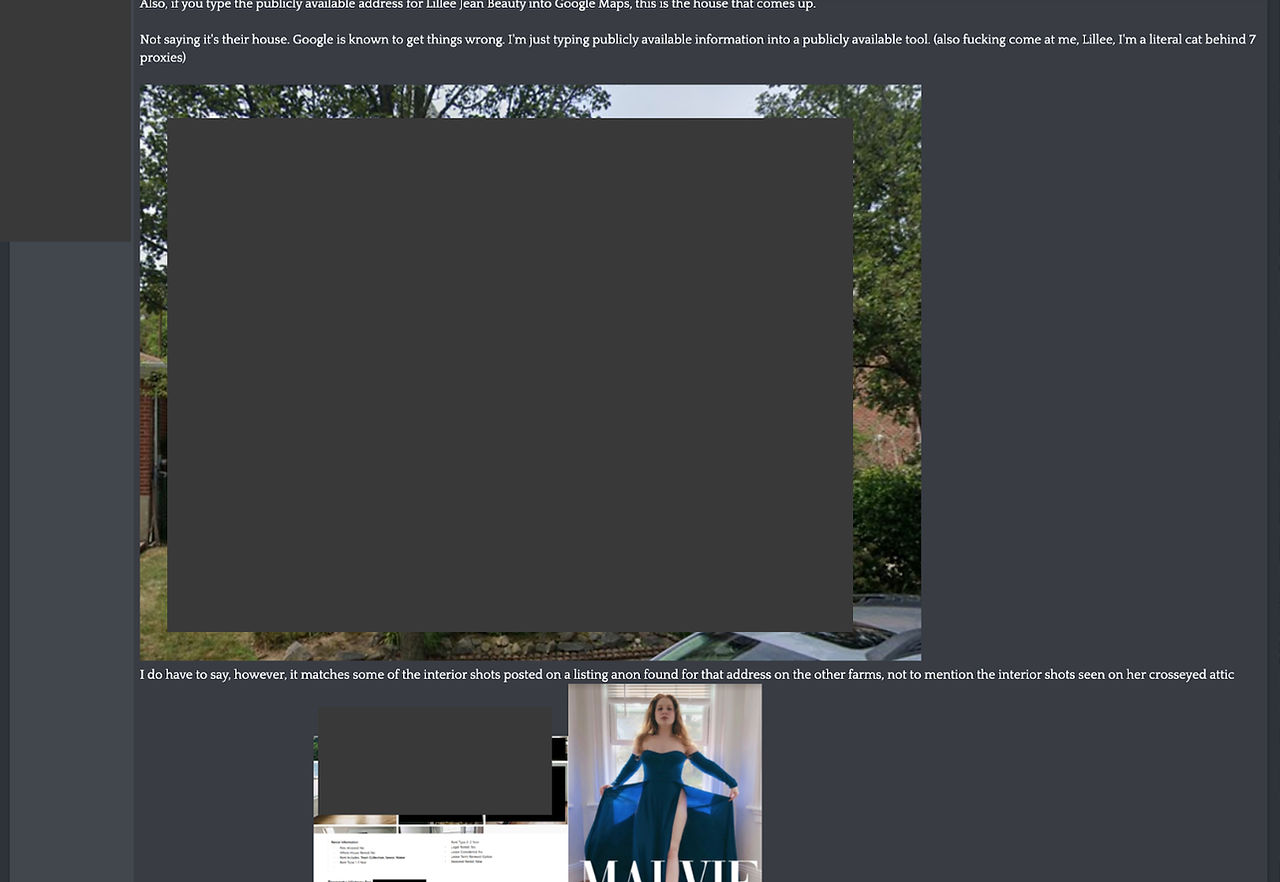
Below is a small sample of the targeted doxxing my family and I have endured online (in person as well - all reported to the NYPD with police investigations), exposed not as a complete forensic file, but as a direct window into how these operations manipulate the public.
Defining the True Boundaries: What is Doxxing?
DOXXING FORENSIC ARCHIVE #1 
DOXXING FORENSIC ARCHIVE #2 
DOXXING FORENSIC ARCHIVE #3
By definition, doxxing is "[to] publicly identify or publish private information about (someone) especially as a form of punishment or revenge" (Merriam-Webster). Essentially, it is the malicious publication of anyone's private, personally identifiable information (PII) without consent, in bad faith. Bad faith is extremely critical when it comes to criminal and civil cases. I only work in reality - NOT he said, she said, or "I think". Thus, all provided forensic files, redacted of course, are as is. They speak for themselves.
All of this includes illegal acts intended to compromise an individual's physical safety, identity security, or financial privacy. I must reiterate that you must report each crime/instance to the police when applicable - it's a paper trail, and when they investigate, it will protect your safety.
In my personal experience, the doxxing my family has faced unprovoked, has manifested in severe, documented breaches:
Physical Surveillance & Stalking: Unauthorized private residential photography captured and published online.
Bad-Faith Exploitation: Data-scraped legally sealed court dockets to distribute and monetize them for sponsored platform video content.
Identity Theft: Publishing non-public, private driver's licenses to illicit networks and the dark web.
These actions represent the definitive, textbook reality of true malicious doxxing.
Independent studios, actresses, and entertainers alike all must remain vigilant and alert against these targeted security breaches. You might feel unimportant, but those are the people grey hat agencies target most.
It's vital to ensure that your family's private data, such as photos, ID'S, as well as physical spaces (your home), and confidential records, remain completely secure behind encrypted corporate shields (such as those offered by Microsoft) and active law enforcement protection. I.E., no inside-your-house photos, and when you can, don't share any personal details.
I must also say, to break the ice further on this topic, there is zero legal loophole or justification that allows an actress, director, or entertainer to be doxxed simply because they maintain a public professional presence.
A professional's visibility in the entertainment industry does not strip away their fundamental, legal right to personal safety, physical privacy, and identity protection. This continues into the European Union as well.
The Exploitation Loop: Monetized Victimhood vs. Law Enforcement Records

SPONSORED HATE/PROFIT LOOP #1 
SPONSORED HATE/PROFIT LOOP #2 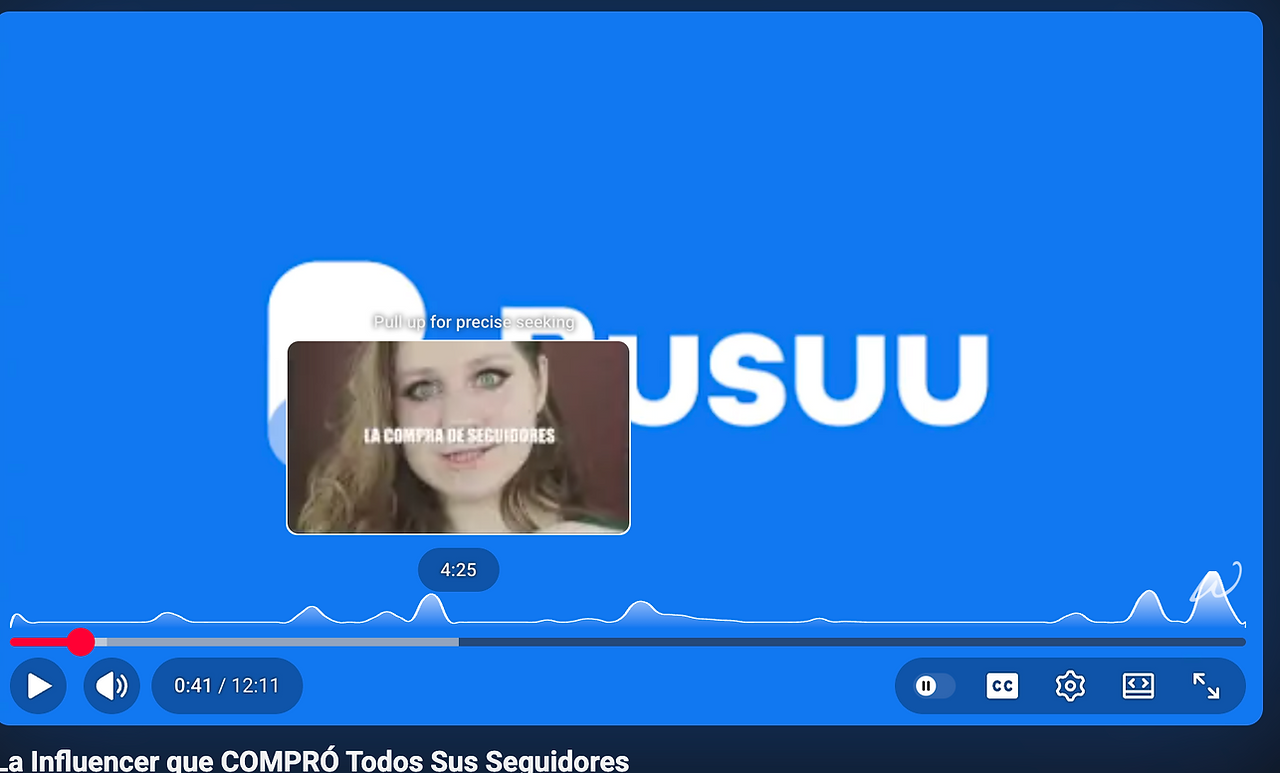
SPONSORED HATE/PROFIT LOOP #3 
SPONSORED HATE/PROFIT LOOP #4 
SPONSORED HATE/PROFIT LOOP #5
Individuals who actively engage in online criminal harassment and tracking campaigns frequently invert the narrative when exposed, claiming that they are the ones being doxxed or harassed. Above are samples of these very narratives monetized, commercialized, and converted into sponsor-ready profit.
These grey-hat and black-hat agencies create scripts that bloat nothing into massive proportions, and the public only listens because they can't reason why someone would risk their credibility over overtly over-sensationalized falsehoods for profit.
However, it's vital to note that a critical legal evaluation reveals the difference between empty allegations and legitimate real crime documentation:
The Reality Check: These bad-faith actors rarely, if ever, possess legitimate, verified law enforcement reports, active police investigations, or certified judicial filings to back up their claims of harassment. It's all hot air, without real reports.
The Profit Incentive: Rather than utilizing proper legal or law enforcement channels, these bad actors produce dozens of highly monetized, sponsored videos. They weaponize sensationalized narratives and highly dramatized grievances solely to generate platform traffic, click-through revenue, and corporate sponsorship payouts. A true person stalked, doxxed, or harassed does not produce "content" - they turn to the law to STOP the person they perceive is doing this "harm" to them. That is what I did. I began to deconstruct the digital racket, (a self-serving loop designed entirely for financial gain and profit with misinformation) by reporting each instance of criminality to the NYPD and FBI.
The Myth of "Doxxing via Copyright Claims"
This is one for the books, but, a common tactic utilized by bad-faith digital actors to evade accountability is the false claim that a standard intellectual property enforcement action, such as a YouTube Copyright Takedown Notice or a formal DMCA filing, constitutes "doxxing." This is a technical and legal impossibility. It's false.
When a studio issues a legitimate copyright claim to protect their federally registered assets, global platforms process the dispute through secure, institutional legal channels.
Large entities (e.g., ABC Corporation or automated platform agents) do not distribute private, protected personal information to third parties during a routine automated dispute, as doing so would violate federal privacy and data-handling laws. It also muddies their case.
Claiming that a legal copyright protection notice is an act of "doxxing" is an intentional fabrication designed to deflect from copyright infringement, and frankly, to make a mockery out of true law and order. By misleading the public, you begin the RICO loop.
Advanced IP Protection and Law: Securing the Investigative Slate
When any independent production tackles high-stakes topics, bad-faith networks normally attempt to muddy the waters by deploying en masse false narratives, throwing around rabid accusations, or attempting to pirate early festival cuts (this happened to Bullyish). The odd part about my case study is that in late 2017, and on July 4, 2019, the RICO loop on my family and I began unprovoked - so my work became a necessary fact-finding truth, blossoming from the criminality. As of July 3, 2026, the chain will be broken, and continue to be dispelled.
To combat all of this with doxxing, and theft, I utilize with Lillee Jean Productions, a strict data-security protocol:
Federal Registration Alignment: Binding all scripts, research files, film stills, and video cuts directly to formal U.S. Copyright Office registration rules (such as Reg. PA002583099 and official records like VA0002472039).
Embedded Cryptographic Metadata: Applying unalterable IPTC and XMP metadata directly into master file containers to verify the authentic origin and ownership of the data across global festival circuits.
Server Isolation: Distributing articles, official press releases, and production logs exclusively through secure, verified domain architectures to starve out unauthorized scraping, malicious tracking networks, and unverified third-party content platforms.
By educating the public on the clear boundaries of online safety and corporate accountability, independents can protect their physical security while continuing to produce impactful, transparent investigative art that sets industry standards.
I want to close with: neither the United States nor the European Union recognizes a public professional career as an exemption from privacy and anti-harassment laws. Just because you're a performer doesn't give any person the golden ticket to harass you.
United States of America
The (RICO) Act (18 U.S.C. §§ 1961–1968): Coordinated networks that engage in systematic copyright piracy, extortion, and targeted identity theft for commercial monetization or sponsorship profit fall squarely under federal racketeering definitions.
The Digital Millennium Copyright Act (DMCA) (17 U.S.C. § 512): US law provides a rigid statutory framework for the immediate removal of copyrighted assets. Issuing a standard DMCA notice is an exercise of federal rights, completely separated from privacy violations.
State Harassment and Cyberstalking Laws: Under New York state law, as that is my hometown, the targeted dissemination of private data or physical surveillance violates explicit criminal harassment statutes, completely independent of an artist's public standing. When intentional criminality outweighs public interest, there is no loophole.
European Union and International Regulations
GDPR (Regulation (EU) 2016/679): The EU maintains the absolute highest standard for data privacy. Under GDPR, Personally Identifiable Information (PII), including private residential data, leases, and identification records, is fiercely protected. There is zero "public figure" loophole under GDPR.
The Berne Convention: International intellectual property relies on automatic copyright protection across global borders. Under the Berne Convention, a person's original work is protected the moment it is created, providing an unassailable legal foundation that prevents bad-faith actors from distributing fraudulent or pirated cuts across European circuits. Just ensure you save the original METADATA!
By enforcing these combined American and European legal protocols, independent filmmakers establish an ironclad global boundary, ensuring that their portfolios and personal security remain fully protected under international law.
True doxxing needs to always be reported to the authorities, as law enforcement can find forensic patterns of criminal harassment and pursue recommendations for prosecution.
Please visit the official Site:
Lillee Jean is an actor and director.